


Visiting the Costa Brava any time of the year is a great idea, but did you know that in autumn you can still enjoy the Mediterranean without all the fuss?
The sea is still warm enough for swimming, the light is golden, and the beaches feel like beaches again, not car parks.
If you are thinking about a late-summer escape to Begur, September and early October are when the best beaches near Begur show their true character.
This guide covers seven standout calas, why this shoulder season is a great time to plan a holiday, and useful tips for making the most of your beach days.
Our favourite beaches near Begur
1. Sa Riera: the family favourite
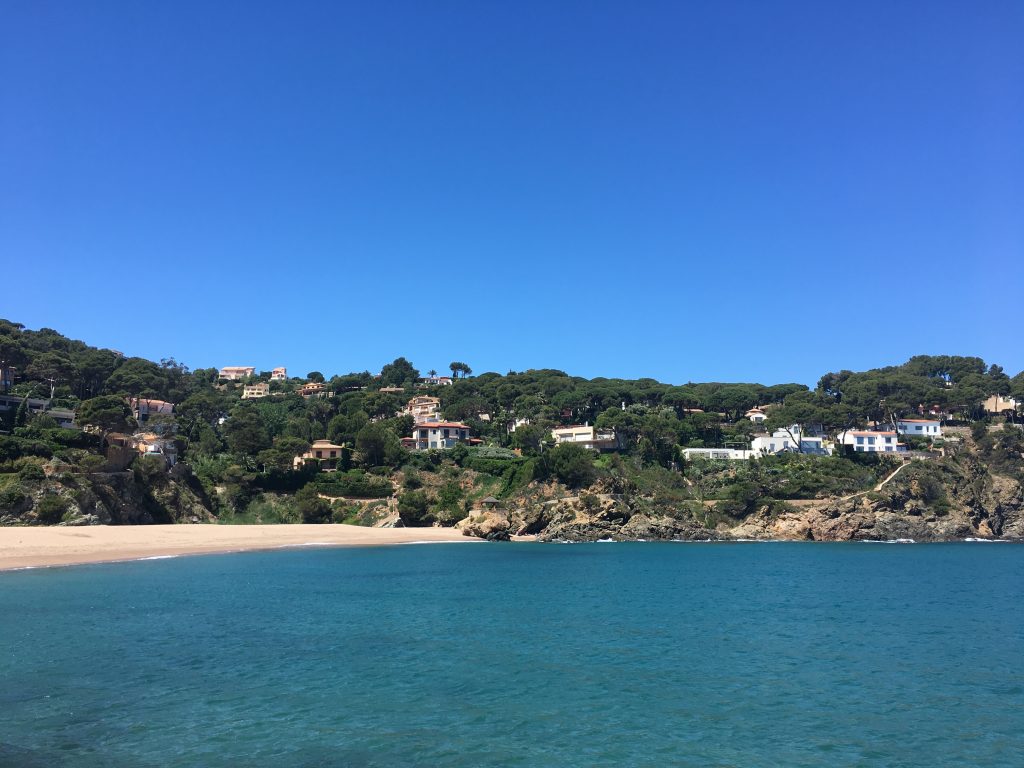
Sa Riera is the largest sandy beach in Begur, stretching nearly 300 metres along a gentle, sheltered bay. The sand here is fine and golden, the waters shallow and clear, which is exactly why it’s great for families. In early autumn, the summer rush has eased, but the water is still warm, and the beach remains well-maintained with proper facilities, including lifeguards, showers, toilets and a chiringuito (beach bar) serving food.
Sa Riera is also the largest and most accessible entry point to the Camí de Ronda, the coastal walking path that strings together all of Begur’s best coves.
The beach has a traditional, lived-in feel; fishing boats still tie up here, and locals outnumber tourists even in high season. That character matters if you want something more authentic than a postcard.
2. Aiguablava: the most photogenic
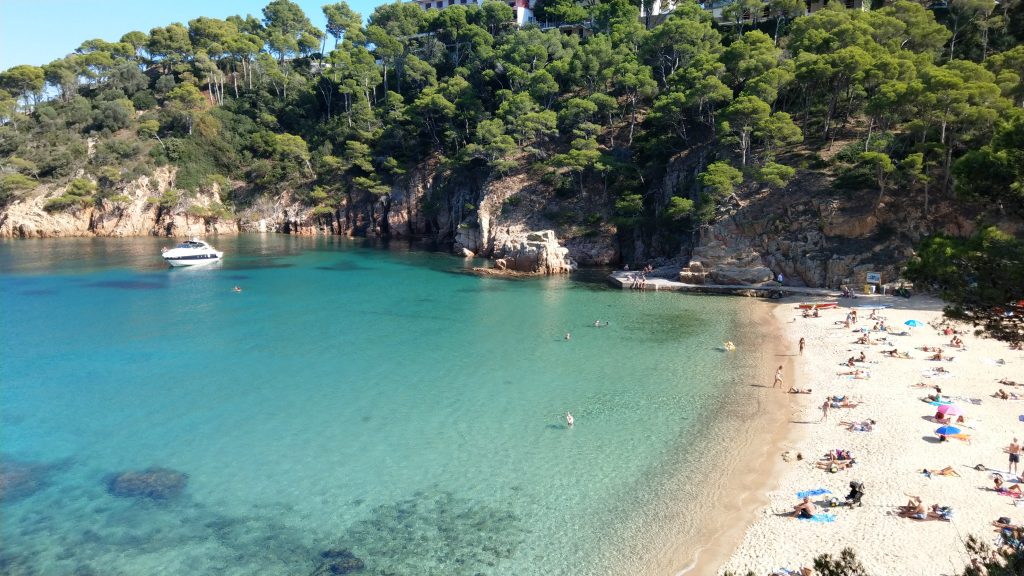
Aiguablava beach is arguably the most well-known beach and the one you have seen in guidebooks. Turquoise water so clear you can see the seabed, and Mediterranean pine forest crowding the cliffs above. It is a smaller beach, so it fills up quickly in summer. Come in the autumn, and you will get the same crystalline water with far fewer crowds.
There is a proper car park just up from the beach (€3 per hour), and the Parador restaurant is at the northern tip of the bay if you want a lunch with views.
Aiguablava is excellent for snorkelling and diving. The rocky seabed supports a lot of fish life, and rental operators based here can sort equipment or lead guided dives.
3. Sa Tuna: the most atmospheric
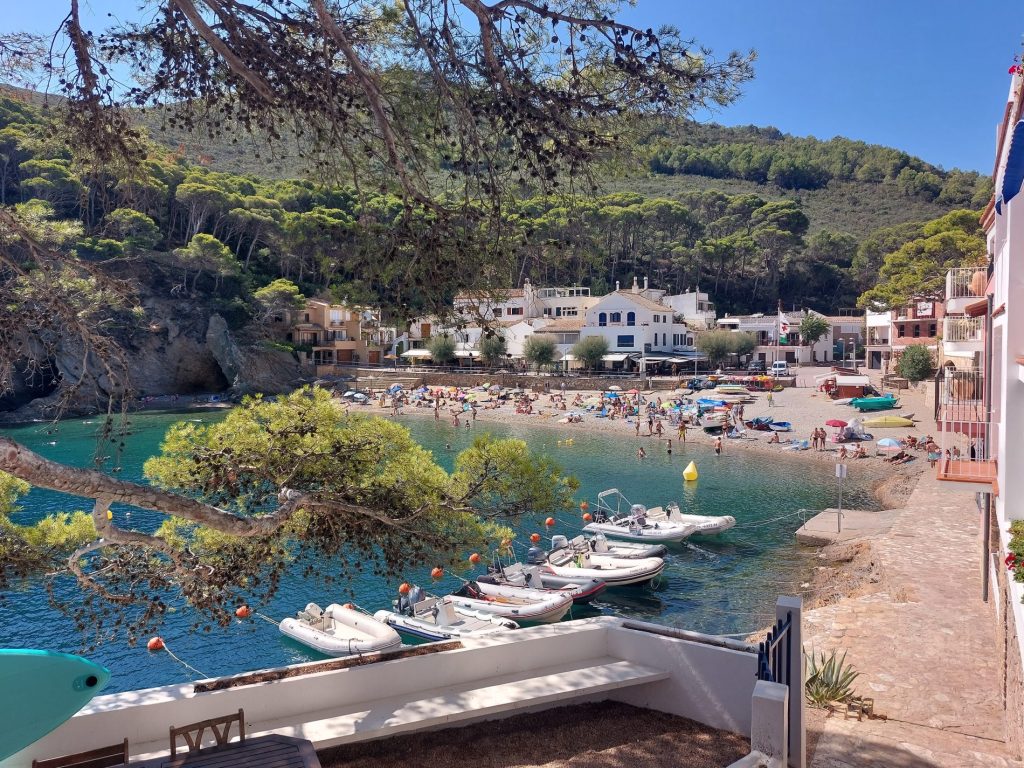
Sa Tuna beach is a small fishing village first and a beach second. The cove is barely 60 metres across, lined with a handful of simple houses painted in soft colours, and two fish restaurants right on the waterline.
The beach itself is a mix of sand and small pebbles, and the water is the same vivid blue as everywhere else on this coast.
We suggest coming at 8 or 9 in the morning before the day-trippers arrive. Swim, order coffee at one of the restaurants, and enjoy the morning.
Sa Tuna is also a natural starting point for coastal walks along the Camí de Ronda, with routes leading back toward Aiguablava or north toward Cape Begur.
4. Platja Fonda: the hidden one
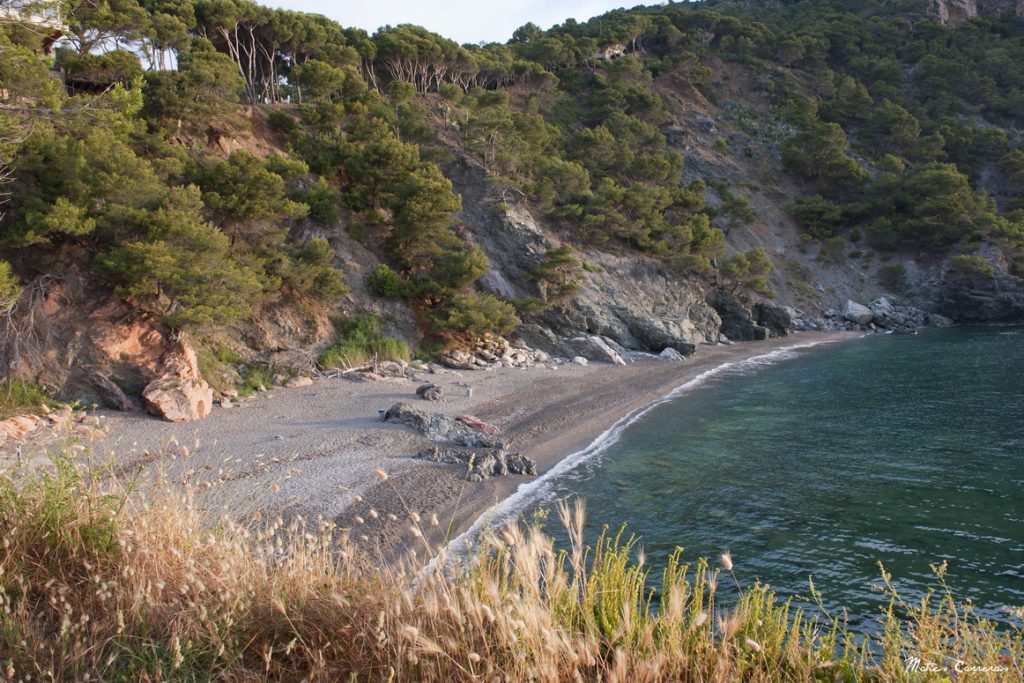
Ask locals which Begur cove they actually prefer, and Platja Fonda is usually at the top of the list. It is accessed only on foot, via a steep staircase carved into the cliff, about five minutes from the car park. The beach is 100 metres of dark grey sand (bring water shoes if you have them; it gets hot), backed by pine forest and a single small beach bar that operates in summer months only.
The water here is noticeably deeper and colder than the shallower calas, which means better snorkelling, as fish love the rocky seabed.
Platja Fonda sits between Cap de Begur and Cap Rubí, making it a natural waypoint for the Camí de Ronda walk if you are hiking the full stretch from Sa Riera southward.
5. Illa Roja: the iconic rock
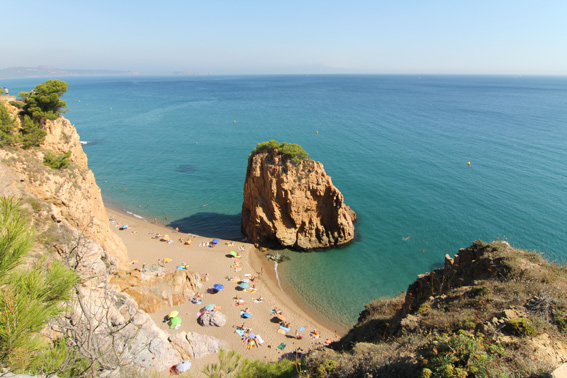
Illa Roja beach is defined by the large reddish rock that rises from the sand and gives the beach its name. It is one of the most recognisable landmarks on the entire Costa Brava coastline. The beach itself is sandy and spacious compared to some of the tighter calas, which makes it popular with families and people who prefer a bit of space to spread out.
One important note: Illa Roja has a designated naturist area, which is clearly marked and respected. Non-naturists swim and sunbathe further along the beach without any issue. The rock itself acts as a visual divider.
Access is via a 10-minute coastal walk from Sa Riera along the Camí de Ronda, or you can drive to Sa Riera car park and walk from there. There are no restaurants directly on Illa Roja itself, but Sa Riera and nearby Pals beach have several dining options within a short walk.
6. Aiguafreda: the sheltered option
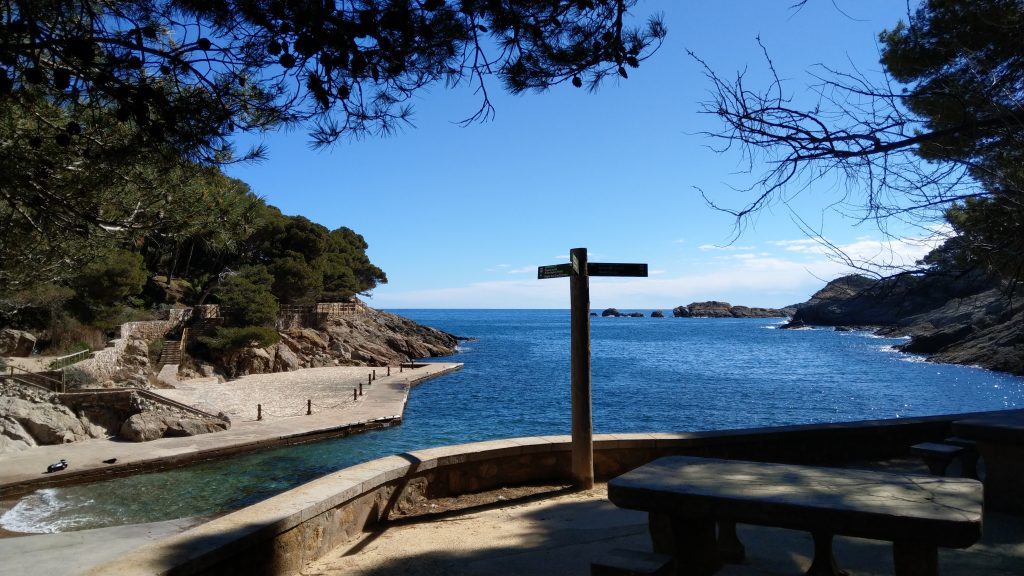
Aiguafreda cove sits between two rock points, Punta de les Vaques and Cap Sa Sal, which shelters it from the north wind (Tramuntana) and the westerly Garbí. This provides calm water even on days when other beaches are choppy. The seabed is shallow and sandy, sloping gradually into deeper water.
It is one of the few beaches near Begur with full facilities such as toilets, assisted bathing amenities, and parking. This makes it a solid choice if you are travelling with older relatives or anyone who needs accessible facilities.
7. El Racó: the widest beach
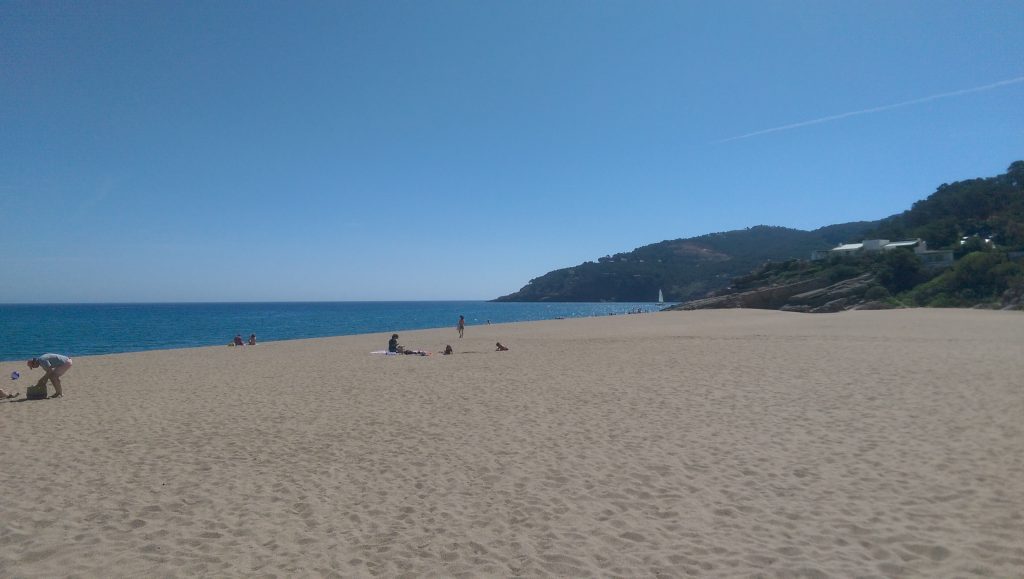
El Racó beach is the widest open beach in the Begur area, stretching across a full sandy bay with shallow water ideal for children. It sits opposite the neighbouring municipality of Pals, which means it is well-connected to local restaurants and shops.
It is less dramatically scenic than Aiguablava or Sa Tuna, but if you want comfort and space rather than romantic isolation, this is the pick.
Also worth a visit
Platja Gran and Platja del Grau (Pals)
Just north of Begur, the long sandy beach of Pals is a different world from the rocky calas: wide, flat and made for children who want to dig, run and play. Platja Gran, nearest the village of Platja de Pals, runs for about a kilometre and a half and has lifeguards in summer. Walk north to Platja del Grau and it gets quieter, especially towards the river mouth. Both have easy parking, toilets, beach bars and watersports rental (kayak, SUP, windsurf), with a view across the bay to the Medes Islands.
S’Antiga
At the far end of Sa Riera, a narrow footpath around the rocks leads to S’Antiga, a cove barely bigger than a postage stamp. Sheltered from the wind, it is a lovely spot to catch the last of the evening sun.
Fornells
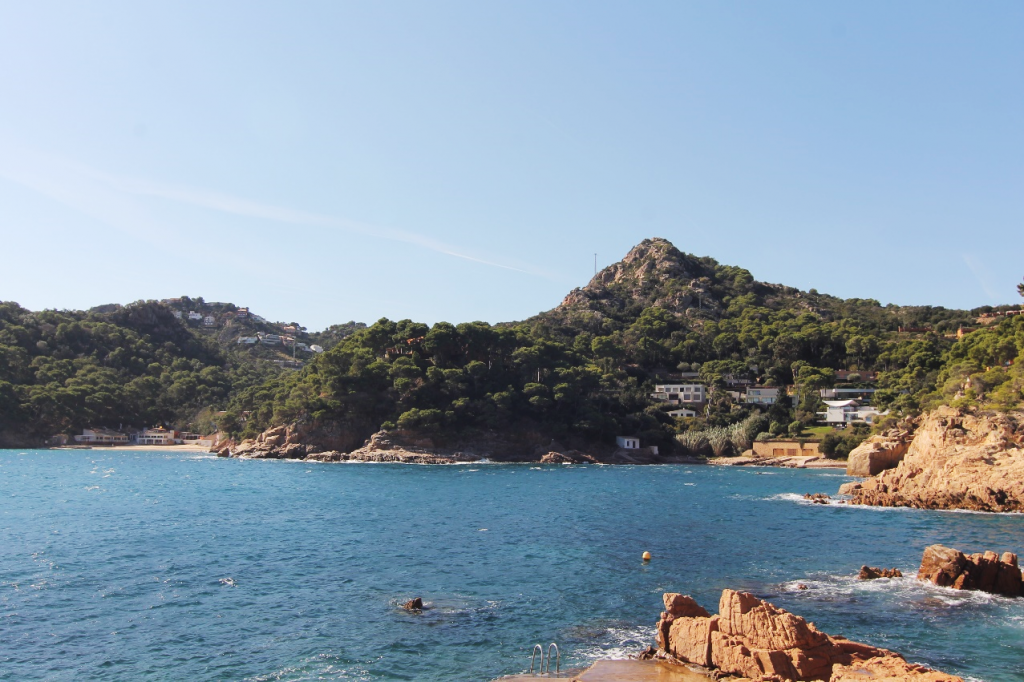
Fornells is less a beach than a tiny harbour village, with pine trees, white houses and a string of small coves along the coastal path. Head south towards Aiguablava for the sandy Cala Port de ses Orats and Cala d’en Malaret, both great for snorkelling, or go north through a short rock tunnel to the pebbly cove of N’Estasia. Near the harbour, flat rocks make a perfect place to sunbathe and dive into calm, clear water.
Practical tips for beach days
Arrive Early and Stay Late
-
- Most important tactic for beaches May–September
-
- Sweet spot: 8–10 AM
-
- Water still glassy
-
- Golden light
-
- Crowds haven’t arrived yet
-
- Sweet spot: 8–10 AM
-
- September offers a longer window than August
Bring Sturdy Shoes
-
- Many beaches have rocky paths or steep staircases
-
- Rocks can be sharp or hot
-
- Recommended: walking boots or sports sandals
-
- Especially important for Platja Fonda and Illa Roja
Pack a Waterproof Bag
-
- Theft is uncommon but does occur in Begur
-
- Leave valuables at your villa
-
- If bringing items to the beach:
-
- Use a dry bag
-
- Bury it under a beach towel
-
- Keep items out of sight
-
- If bringing items to the beach:
Ready to book your stay in Begur
The beaches of Begur are something unique that you cannot find in every coastal area in Spain.
ComfortVilla offers a hand-picked collection of villas with private pools in and around Begur, Sa Riera, Tamariu and Aiguablava. Our own team in Begur knows every property personally and is happy to recommend the right one for your beach break.
Get in touch, and we will be happy to help plan your next holiday.